

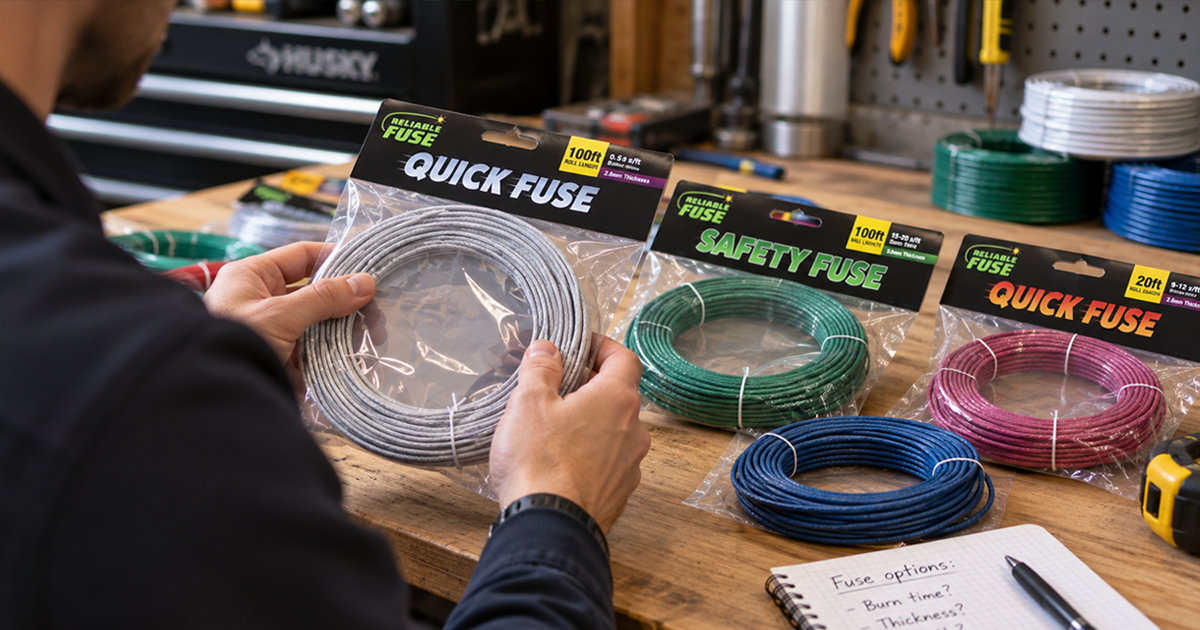
So, You Need Fuse
You open a fuse product listing and immediately get hit with numbers. You see millimeters, seconds per foot, feet per roll, Visco fuse, quick fuse, slow fuse, and probably a few other details that make perfect sense if you already know what they mean.
If you are figuring out how to choose fuse, those specifications are actually useful once you know what you are looking at. Each one tells you something about how the fuse performs, what it is designed for, or how much you are getting.
Here is what those specifications actually mean and why they matter.
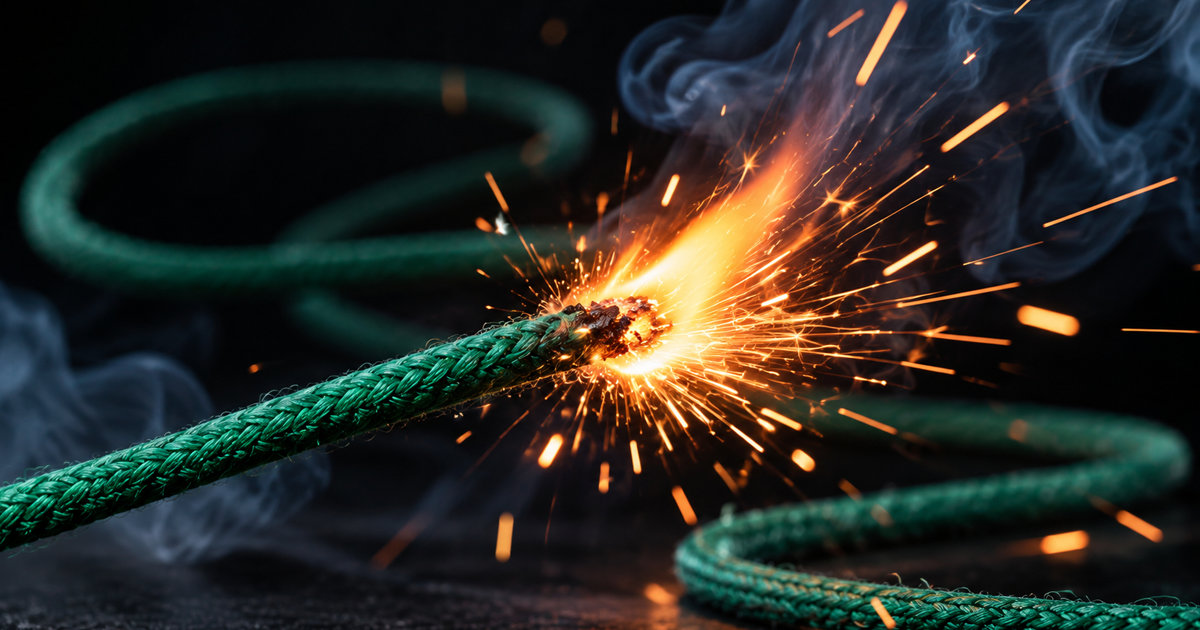
Start With the Fuse Burn Rate
If there is one specification you should pay close attention to, it is the fuse burn rate.
Burn rate tells you approximately how quickly the fuse burns. It is often listed in seconds per foot, although very fast fuse may be measured differently. A standard Visco fuse that burns at a steady pace behaves very differently from quick fuse designed to move fire from one point to another much faster.
When figuring out how to choose fuse, consider the timing you need for your particular setup. Different burn rates serve different purposes, so you do not want to assume two types of fuse are interchangeable simply because they look similar.
Published burn rates are also approximate. Manufacturing tolerances, storage, environmental conditions, and other factors can affect real-world performance. The listed burn rate gives you the information you need to compare products and understand what each one is designed to do.
What Does Fuse Diameter Tell You?
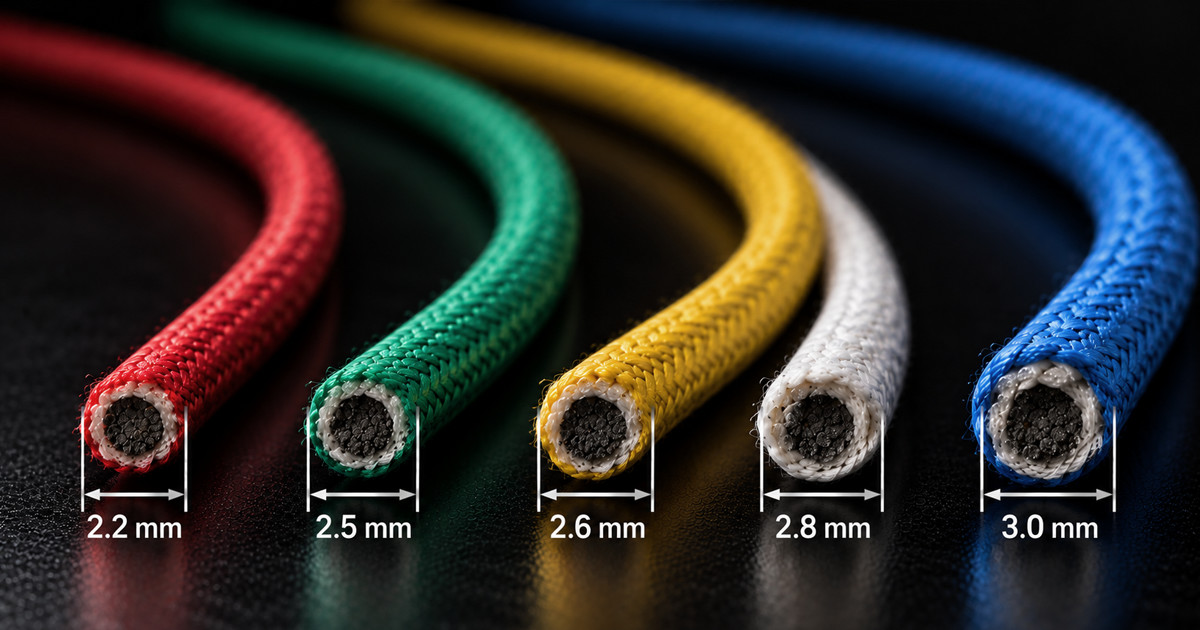
The next number you are likely to see is the diameter of the fuse wire, usually measured in millimeters.
Fuse diameter can help distinguish one product from another, but it also matters when your setup requires fuse that fits a particular connector, tube, or other component. A difference of a fraction of a millimeter might not look dramatic in a product photo, but that does not mean it is irrelevant.
This is one reason learning how to choose fuse based on specifications is more reliable than going by appearance. If your setup requires a particular diameter, check the actual measurement instead of trying to judge the size from a photo.
Millimeters are not particularly cooperative with eyeballing.

Pay Attention to the Roll Length
The amount of fuse wire you are buying should be clearly identified in the product listing, usually as the number of feet per roll.
Before ordering, think about how much fuse your project actually requires. If you are cutting several individual lengths, making multiple connections, or working with a larger layout, those feet can disappear surprisingly quickly.
The right fuse in the wrong quantity is still a problem.
When deciding how to choose fuse for a project, look at both the specifications and the amount supplied. Depending on the product, you may have several roll lengths available, making it easier to buy an amount that makes sense for what you are doing.
Visco, Quick Fuse, Slow Fuse: The Product Type Matters
The product name itself can tell you quite a bit, but it should never be the only thing you read.
Standard Visco fuse, quick fuse, and slower-burning fuse have very different characteristics. Even within the same general category, you may find products with different burn rates, diameters, colors, and roll lengths.
That is why knowing how to choose fuse means reading beyond the name at the top of the page. The product type gives you a starting point. The specifications give you the information you need to understand exactly what you are buying.
Check the burn rate, diameter, and roll length alongside the product description. Once you know what those numbers mean, the listing becomes considerably easier to understand.
Does Fuse Color Matter?
Color can be useful for distinguishing between products, but you should never rely on color alone to identify fuse wire or determine how quickly it burns.
Different fuse products may come in different colors, patterns, or coatings. Appearance can help you tell products apart when you already know what they are, but it is not a substitute for checking the specifications.
If you keep multiple types of fuse on hand, make sure you can identify them later. A loose roll of mystery green fuse you vaguely remember buying six months ago does not come with particularly reliable specifications.
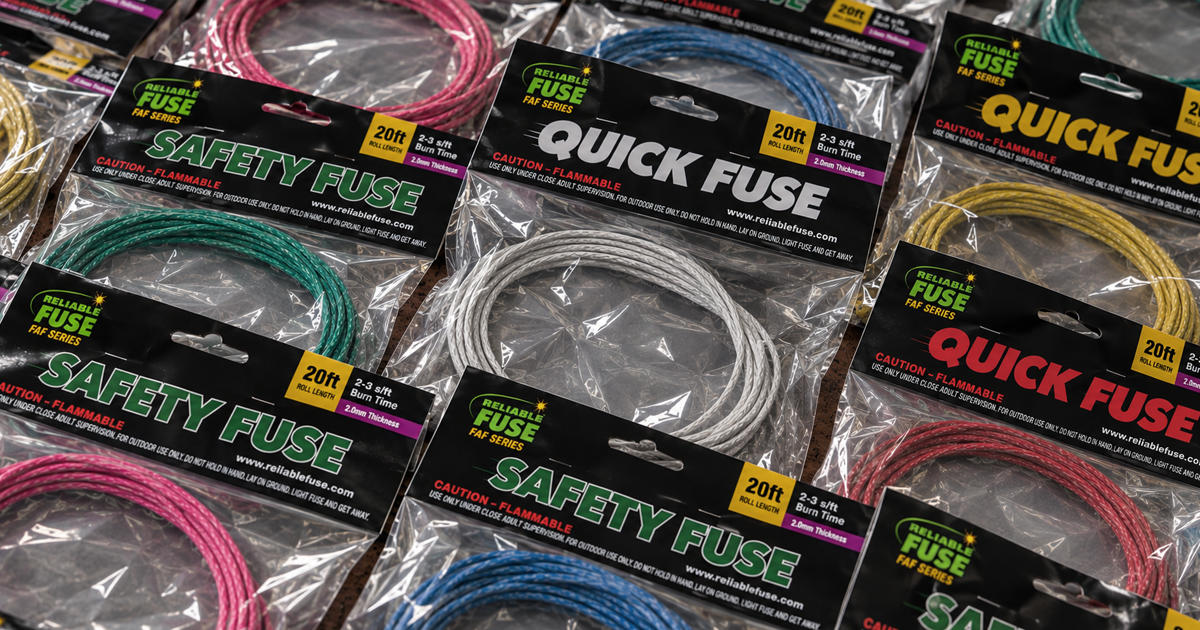
How to Choose Fuse Without Overcomplicating It
Once you understand what the specifications mean, learning how to choose fuse becomes much more straightforward.
Start by understanding the type of fuse your project requires and the burn rate you need. From there, check the diameter and any other relevant specifications. Finally, make sure you are ordering enough fuse wire for the project you have planned.
Most importantly, do not make assumptions based on appearance or what you remember buying last time. Read the current product listing and specifications before making your choice.
Reliable Fuse gives you the details because the details matter. Once you know how to read them, all those numbers stop looking like a wall of technical information and start doing exactly what they are supposed to do: helping you figure out what you need.