

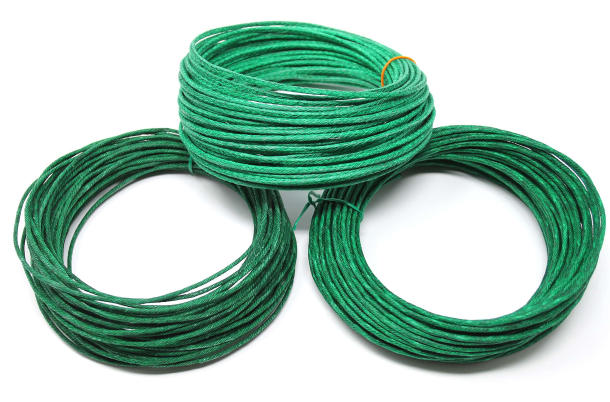
Burn rate is measured in seconds per foot. That’s it. No tricks. No hidden meaning.
If a fuse burns at 12 seconds per foot, every foot of fuse gives you roughly 12 seconds before it reaches the end. Two feet? About 24 seconds. Three feet? Around 36. The math is simple, even if you never actually do it.
What matters more than the exact number is consistency.
A good safety fuse burns steadily. It doesn’t race, hesitate, or surprise you halfway through. That steady, predictable timing is what lets you plan confidently, even if your setup is basic.
Speed gets all the attention, but consistency is the real MVP. A slightly slower fuse that burns the same way every time will feel easier to work with than a fast fuse that’s unpredictable. Reliability beats raw speed, every single time.
Once you understand that burn rate is just timing you can plan around, the whole thing stops feeling intimidating.

When Faster Burn Rates Make Sense
Faster burn rates aren’t “advanced.” They’re just situational.
They shine when timing matters more than flexibility.
Short setups are a big one. If your fuse run is short and direct, a faster burn rate keeps things moving without dragging out the wait. You light it, you know it’s happening soon, and there’s less standing around wondering when the moment will arrive.
Tight timing is another reason people go faster. If your setup needs things to happen close together, or you’re coordinating multiple elements, a faster fuse helps keep everything aligned without long gaps.
There are also situations where hesitation causes problems. Too much delay can introduce uncertainty. People second-guess, reposition, or hover when they should already be clear. In those cases, faster timing can actually make things smoother because there’s less time to overthink after lighting.
The key is that faster burn rates assume you already know what you want the timing to be. They’re great when your setup is simple, controlled, and familiar.
They’re not a flex. They’re a tool.
When Slower Burn Rates Are the Better Choice
Slower burn rates are where most people should start, and there’s no shame in that. In fact, there’s a lot of wisdom in it.
Extra reaction time is the biggest advantage. A slower fuse gives you a calm buffer. Light it, move away, settle in. There’s no rush and no pressure to move at lightning speed.
Longer distances also pair naturally with slower burn rates. When you’re running more fuse, slower timing keeps things predictable and comfortable instead of compressing everything into a tense countdown.
They’re also ideal for learning setups. When you’re still figuring out how things feel, slower fuse gives you room to observe and adjust. You learn what timing feels like, not just what it measures on paper.
Slower doesn’t mean boring or inefficient. It means forgiving. And forgiveness is extremely underrated when you’re building confidence.
The Most Common Burn Rate Mistakes Beginners Make
Almost all burn rate mistakes come from the same place: trying to outsmart a simple decision.
Buying too fast “just in case.”
This is the classic move. Faster feels safer somehow, even when it isn’t necessary. In reality, fast fuse removes margin for error. If you’re not sure what you want yet, speed usually adds stress instead of solving it.
Overcompensating with length.
Some people buy a fast fuse, then add extra length to slow things down. That works… until it doesn’t. You end up with awkward runs, wasted material, and timing that still feels off. Choosing the right burn rate up front is cleaner than trying to fix it with extra feet later.
Mixing burn rates unintentionally.
This one sneaks up on people. Different rolls, different burn rates, same setup. Suddenly timing feels inconsistent and no one knows why. Keeping burn rates consistent within a setup removes a huge source of confusion.
None of these mistakes mean you “did it wrong.” They just mean you didn’t have a simple framework yet. Which brings us to the easy part.
A Simple Way to Choose the Right Burn Rate Every Time
Forget charts. Forget formulas. You don’t need them.
Ask yourself one question:
Do I want more time or less time after I light the fuse?
That’s it.
If you want more time to move, think, and breathe, choose a slower burn rate.
If you want less waiting and tighter execution, choose a faster burn rate.
Then stick with it consistently across your setup.
You don’t need to calculate exact seconds. You don’t need to chase perfection. You just need to decide how rushed you want to feel after lighting.
Most people are happier erring on the side of more time, especially at first. Confidence grows naturally once timing feels predictable. From there, adjusting burn rate becomes intuitive instead of stressful.
Burn rate isn’t about being precise. It’s about being comfortable.
You’re Not Overthinking It Anymore
Choosing the right fuse burn rate doesn’t require expert knowledge. It requires clarity.
When you understand that burn rate is just timing, not a test, everything gets simpler. You stop guessing. You stop stacking fixes on top of fixes. You pick what fits your setup and move on.
That’s how fuse is meant to work.
Ready to choose without second-guessing?
Pick your burn rate with confidence. Shop safety fuse built to burn right.
No drama. No overthinking. Just fuse that does exactly what you expect it to do.