

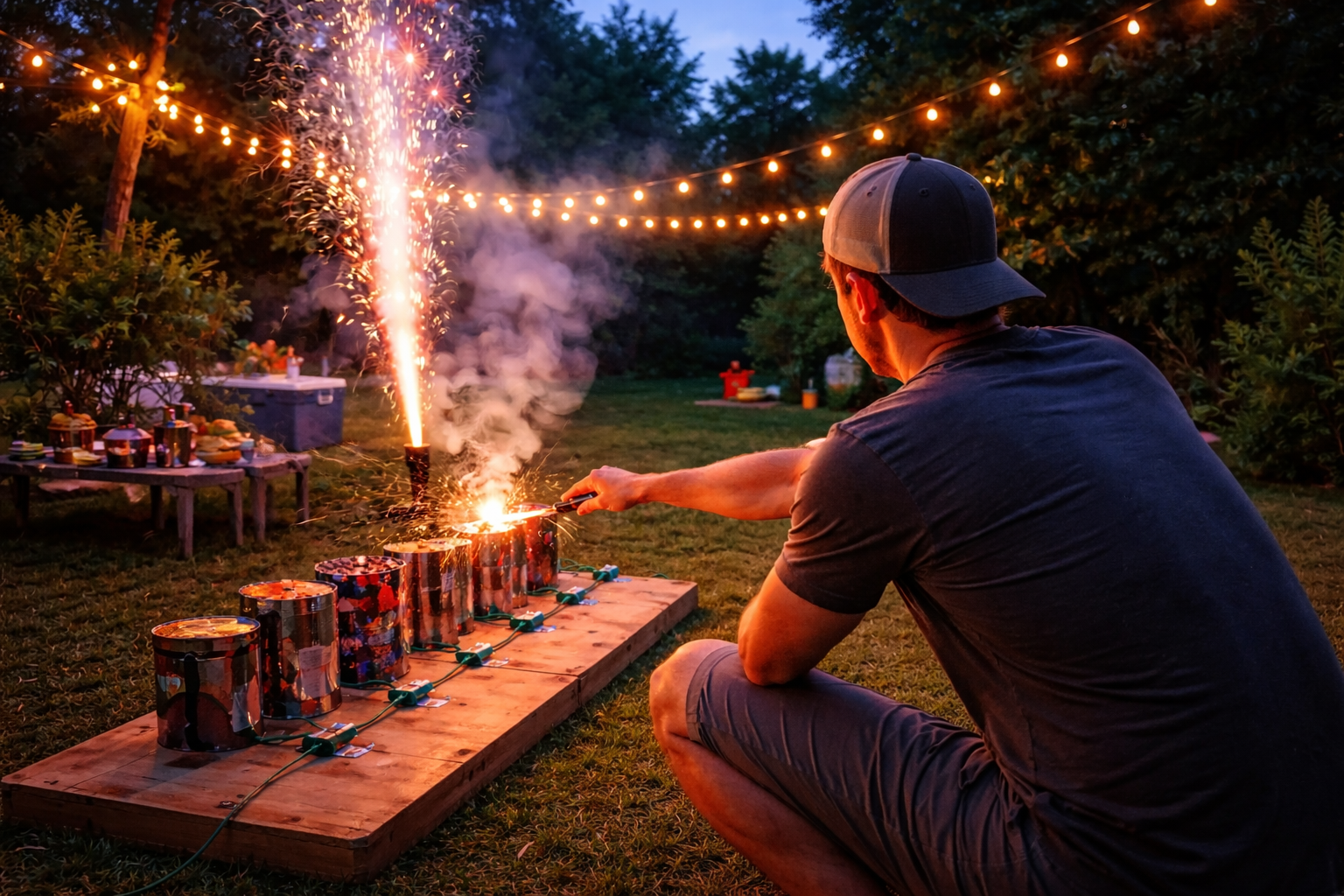
Anyone who’s spent time around fireworks has seen the full range of shows. There are the backyard setups where someone lights one piece at a time and jogs back to the lawn chair while everyone waits for the next round. There are neighborhood shows that somehow run smoothly from start to finish. Then there are the displays that clearly had a plan behind them, where one effect rolls into the next without a pause.
That smooth timing makes a lot of people assume there must be a serious fireworks ignition system behind the scenes. Wires, control panels, maybe someone wearing safety glasses and looking important.
The reality is much simpler.
A steady length of safety fuse, predictable burn rates, and a few well-placed fuse connectors can create a continuous fireworks display without any electronics at all. Ignition travels from one firework to the next, the show keeps moving, and suddenly the whole thing feels intentional instead of improvised.
Once you understand how to fuse fireworks together, the difference between a stop-and-go backyard show and a smooth one becomes surprisingly small.
And a lot more fun to build.
Fuse connectors make fireworks flow like a real show
The biggest difference between a backyard display and a professional-looking one usually comes down to timing.
Lighting fireworks one at a time creates pauses. Even when everything goes perfectly, the rhythm still feels like a series of individual moments instead of one continuous display.
Fuse connectors change that rhythm completely.
Instead of lighting each firework separately, the fireworks are connected ahead of time using fuse and fuse connectors. Once the main fuse is lit, ignition simply travels from one piece to the next. One firework finishes, the fuse keeps burning, and the next effect begins almost immediately.
The result feels coordinated even though the system itself is incredibly simple.
Backyard builders who try fuse connectors for the first time usually have the same reaction: it turns out the “secret” behind smooth fireworks shows is mostly just letting fuse do its job.

Fuse connectors and fireworks timing start with predictable burn rates
Fuse is simple, but it’s also extremely dependable when you use the right type.
A consistent burn rate is what makes sequencing possible. When fuse burns steadily, each section of fuse becomes a small piece of timing control. Short sections create quick transitions between fireworks. Longer sections create a pause that lets one effect finish before the next one starts.
This is why so many backyard enthusiasts rely on 2.2 mm safety fuse when building a manual fireworks ignition system. The burn rate stays steady, the fuse behaves predictably, and it works perfectly with fuse connectors when linking fireworks together.
Reliable timing is what allows fuse connectors and fireworks setups to behave like a planned show instead of a series of guesses.
Once the burn rate becomes predictable, the layout becomes easier to control.
Fuse connectors and fireworks layouts make building a show surprisingly simple
Learning how to fuse fireworks together sounds complicated at first. In practice, it’s mostly about organizing the fireworks and letting the fuse carry the timing.
A simple setup usually follows the same basic pattern:
- Arrange fireworks in the order you want them to fire
- Run a main line of 2.2 mm safety fuse between the pieces
- Use fuse connectors to attach each firework’s fuse to the main line
- Leave enough spacing for the fuse to burn cleanly between items
When the main fuse is lit, ignition moves through the system automatically. Each firework receives flame from the fuse as it burns along the line.
Instead of restarting the show every thirty seconds, the fuse becomes your timing system.
This is the same basic principle used in many fireworks ignition system designs, just without the electronics.
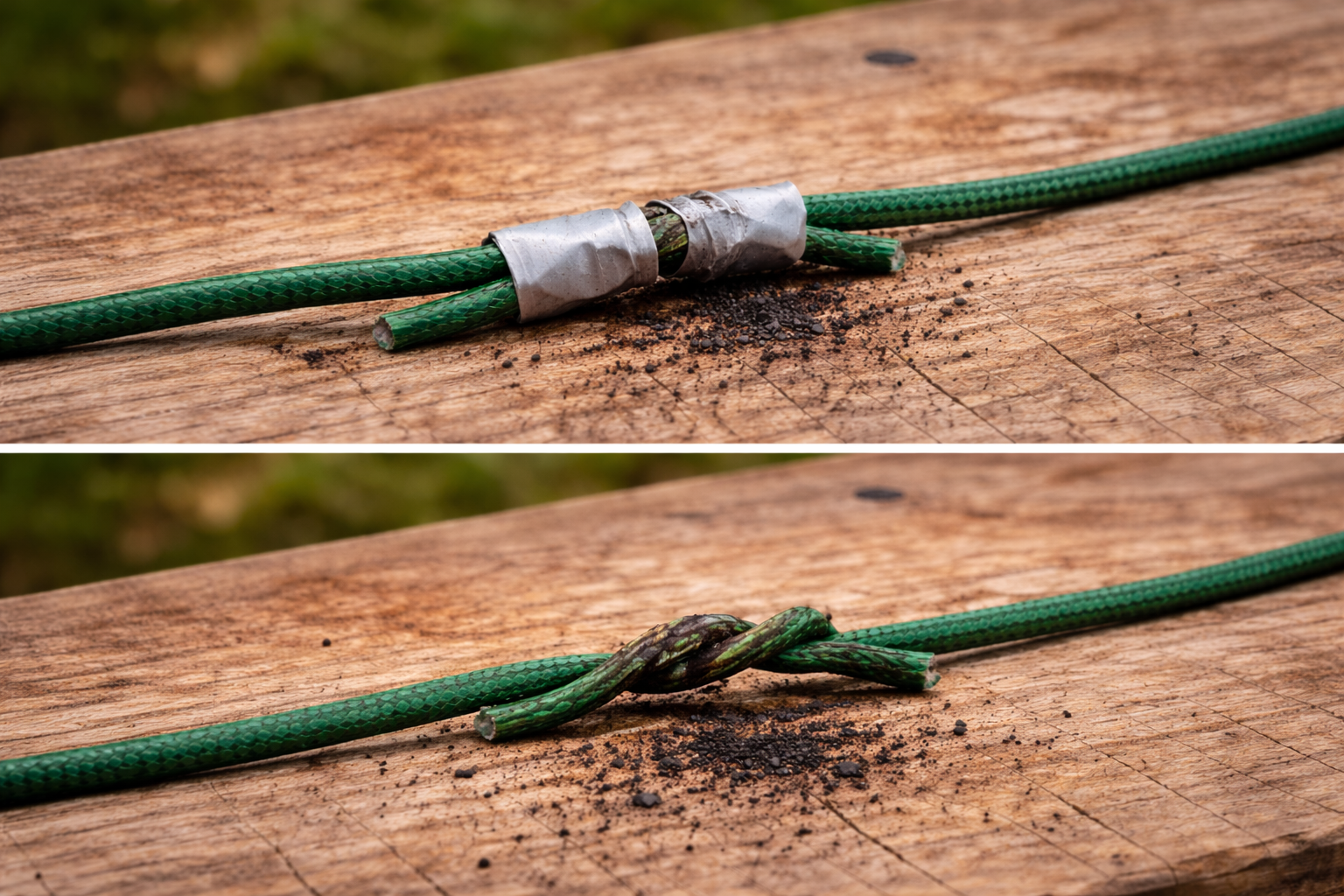
Fuse Connector review: the small tool that makes fireworks setups easier
Anyone who has experimented with linking fireworks together has probably tried a few creative connection methods along the way.
Tape works sometimes. Twisting fuse together occasionally works. Optimism has a surprisingly mixed track record.
Fuse connectors exist for one reason: to make those connections reliable.
A proper connector keeps fuse aligned so the burn travels cleanly from one section to the next. That alignment removes a lot of the uncertainty that can happen when connections are improvised. The fuse stays in contact, the flame continues forward, and the next firework lights the way it should.
That’s why most fuse connectors review conversations sound pretty similar. Once people try them, they tend to keep using them.
Less fiddling with connections means more time designing the show.
Fuse connectors and fireworks are the easiest step toward a pro-style backyard show
Many backyard enthusiasts assume the only way to improve their display is by buying more fireworks or investing in a complicated fireworks ignition system.
In reality, the biggest upgrade often comes from connecting the fireworks you already have.
Fuse connectors and fireworks sequencing allow a backyard show to run smoothly from one effect to the next. Combined with the steady burn of 2.2 mm safety fuse, that simple setup can produce transitions that feel surprisingly professional.
The audience rarely sees the work behind the scenes.
They just see fireworks that keep moving, effects that follow one another naturally, and a show that feels like it was planned instead of assembled on the fly.
And once you see your fireworks run that way for the first time, lighting them one at a time suddenly feels a lot less interesting.
Because when fuse connectors are doing their job, the show practically runs itself.
Ready to build a smoother fireworks show?
Shop fuse connectors and safety fuse and start planning your next backyard display.